
Why the ocean
Below the surface, everything is alive.
From a boat, the sea is one flat colour. Put your face in the water and it opens: light that bends, a whale's slow shadow, a world held together by quiet systems.
This site is a dive because that is how we work. This page is for the sea that taught us the word.
Immersion
We learned it from the water.
Immersion is a simple idea. Before we build anything, we go in: into the business, past what shows on the surface, until we see how the work really moves.
The sea asks the same of everyone. Slow down. Breathe. Look closer. It pays you back with everything you could not see from above.
So we made this site a dive. And because the sea deserves the truth, everything you meet down here is real: Costa Rican species, facts you can check, even the trash, because the real sea has that too.
Nothing down here is made up.
Field guide
Seven lives on the way down
Every animal in this site lives in Costa Rica's waters or on its shores. Here they are up close: a real photograph, one fact you can check and, where we have one, the animal itself, turning in the light.
Plate 01
Humpback whaleMegaptera novaeangliae
Where Pacific coast of Costa Rica
Costa Rica's Pacific coast is visited by humpbacks from both hemispheres: two separate populations arrive at opposite times of year to breed, from feeding grounds in the north and in the south.
Source: NOAA Fisheries ↗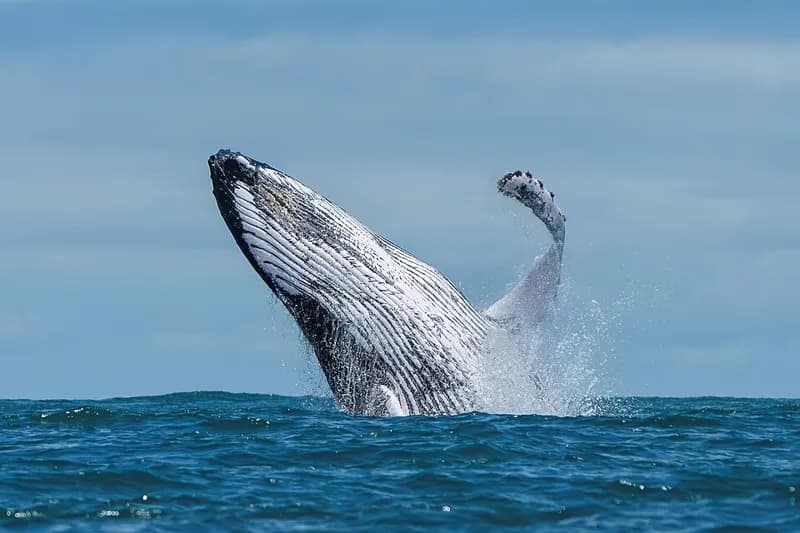
Photo: Giles Laurent, CC BY-SA 4.0 · 3D model: Bohdan Lvov, CC BY 4.0 Plate 02
Pacific sailfishIstiophorus platypterus
Where Pacific coast of Costa Rica
Sailfish tagged off Pacific Costa Rica travelled between 340 and 986 km in a matter of weeks, crossing the waters of six countries.
Source: Frontiers in Fish Science, 2024 ↗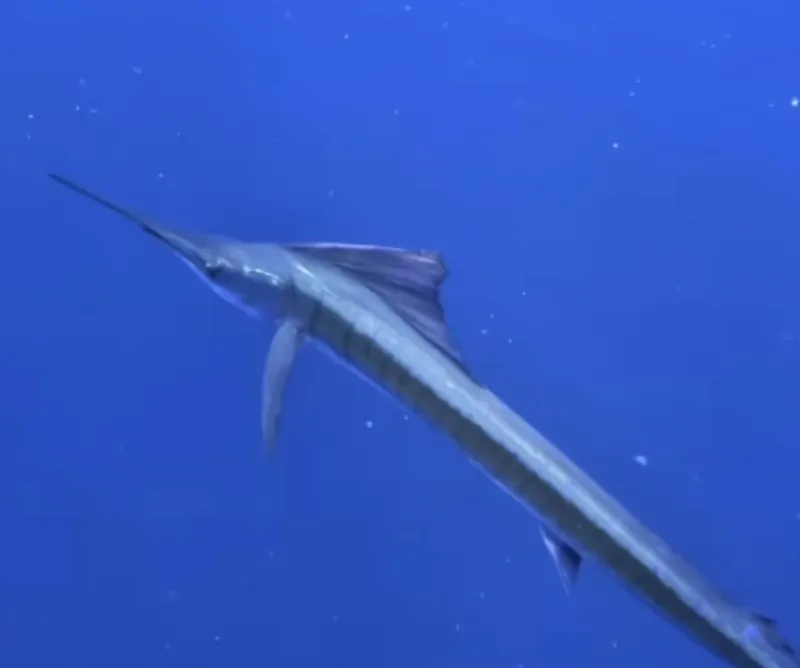
Photo: Vsevolod (iNaturalist), CC BY 4.0 · 3D model: Mateus Schwaab, CC BY 4.0 Plate 03
Olive ridley sea turtleLepidochelys olivacea
Where Ostional and Nancite, Guanacaste
An estimated 600,000 olive ridleys nest on Costa Rica's Pacific coast, at its two mass-nesting beaches, Ostional and Nancite, where thousands come ashore together in an arribada.
Source: NOAA Fisheries ↗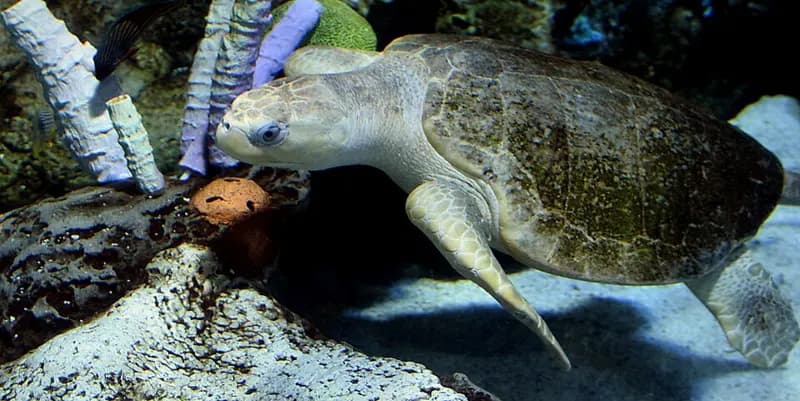
Photo: incidencematrix, CC BY 2.0 · 3D model: DigitalLife3D, CC BY 4.0 The 3D turtle is a flatback, the closest model we could find. The photograph is a real olive ridley.
Plate 04
Bioluminescent planktonNoctiluca scintillans
Where Gulf of Nicoya
In February 2026, scientists documented the first extensive glowing bloom of the dinoflagellate Noctiluca scintillans in the Gulf of Nicoya, lighting up the water at night.
Source: Harmful Algae News, IOC-UNESCO, 2026 ↗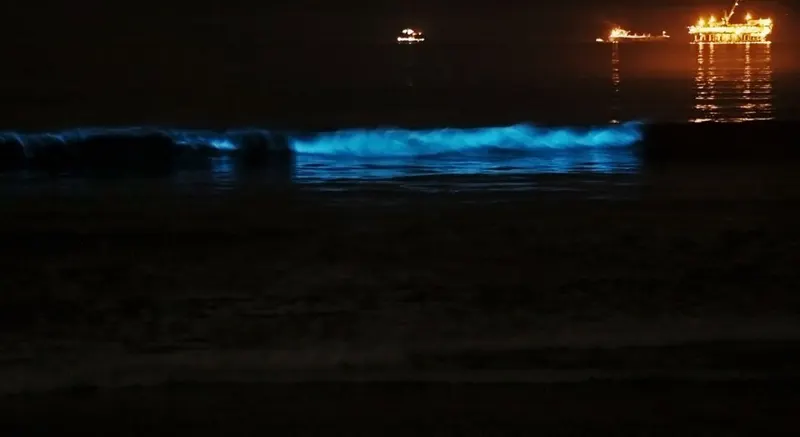
Photo: makelessnoise, CC BY 2.0 Plate 05
Scalloped hammerheadSphyrna lewini
Where Isla del Coco
At Isla del Coco, a UNESCO World Heritage Site 550 km off Costa Rica, scalloped hammerheads gather in exceptional numbers. The species is Critically Endangered.
Source: UNESCO World Heritage Centre ↗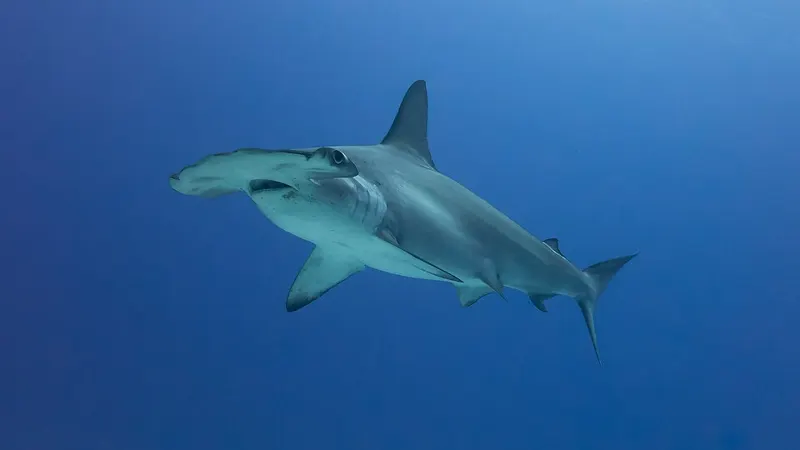
Photo: Kris-Mikael Krister, CC BY 2.0 · 3D model: sharkingaround, CC BY 4.0 Plate 06
Sally Lightfoot crabGrapsus grapsus
Where Rocky shores of the Eastern Pacific
Sally Lightfoot crabs are dark when young and grow brighter with each molt. When cornered, they can squirt water, pinch, or drop a leg to escape.
Source: Animal Diversity Web, University of Michigan ↗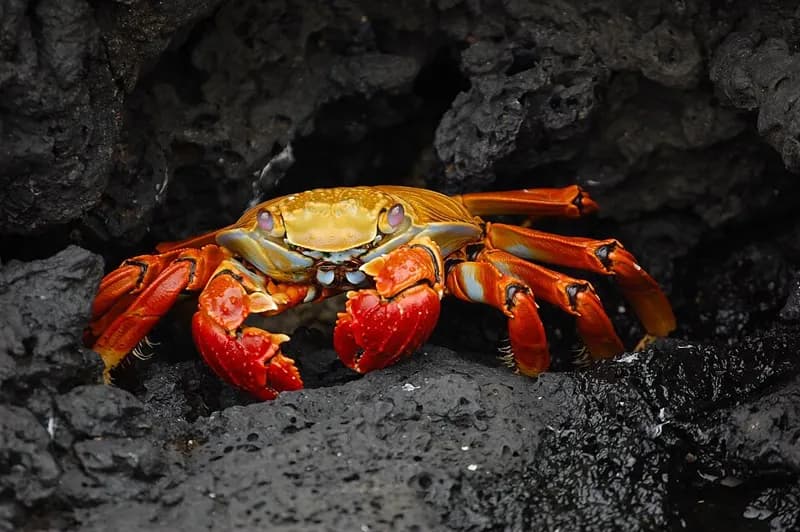
Photo: Lt. Elizabeth Crapo, NOAA Corps, public domain Plate 07
Guineafowl pufferArothron meleagris
Where Cuajiniquil, Guanacaste
In 2022, guineafowl puffers off Guanacaste were filmed changing their colour pattern within seconds, the first time this was reported in the species.
Source: Marine Biodiversity, 2024 ↗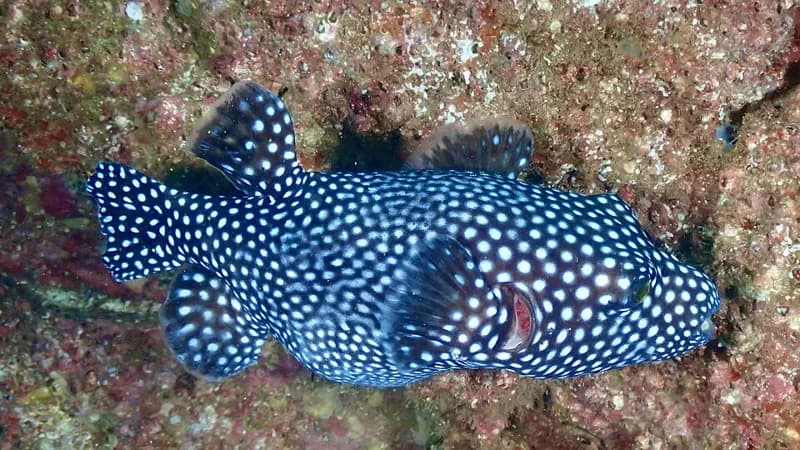
Photo: Chris Spain, CC0
Met some of them in the dive? They're kept in your field log, at the foot of every page.
The seabed at the foot of each page has neighbours of its own: a jewel moray at home in the rocks, and a school of Panamic sergeant majors passing through.
Costa Rica's sea
A small country with a very big sea
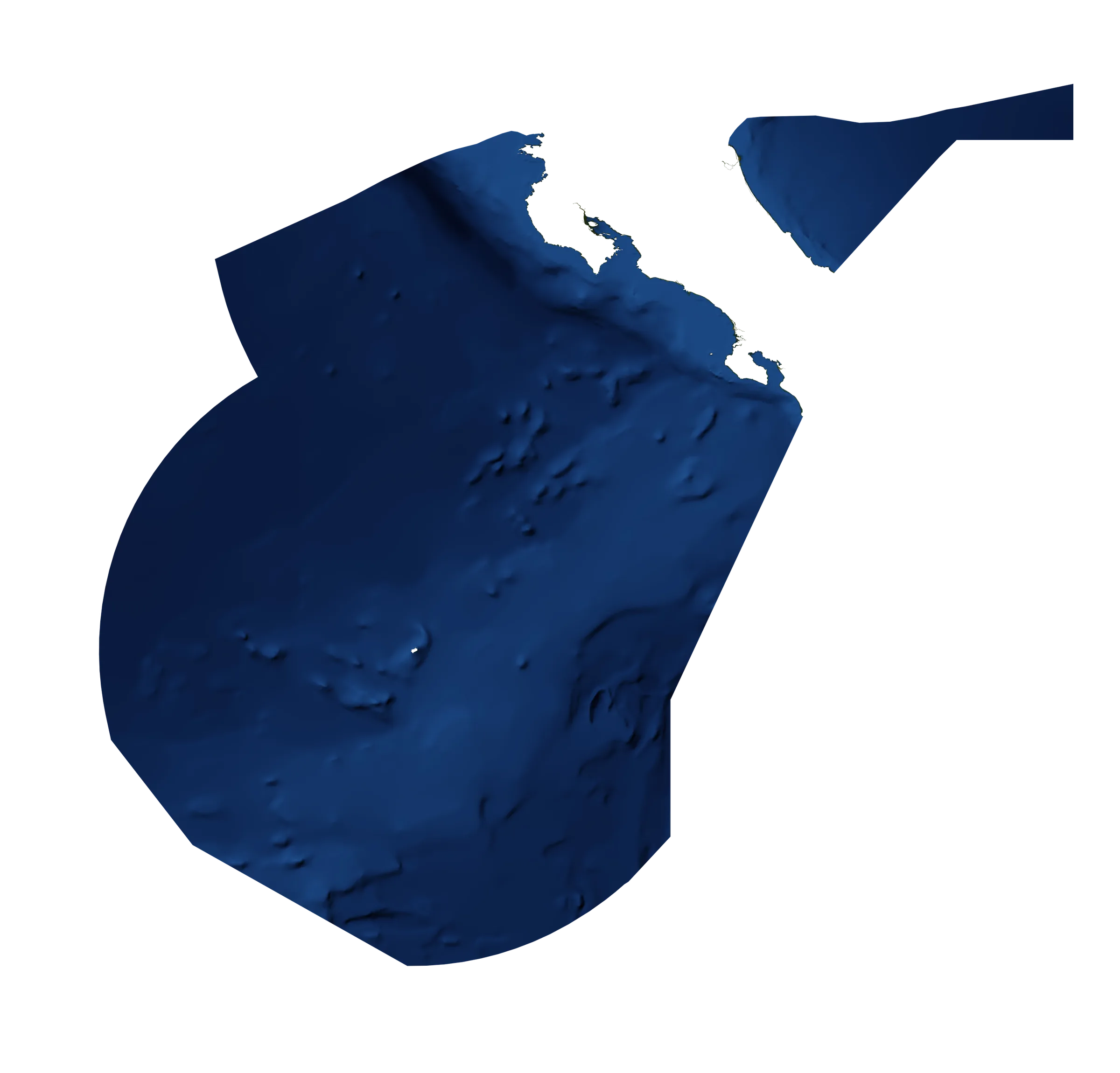
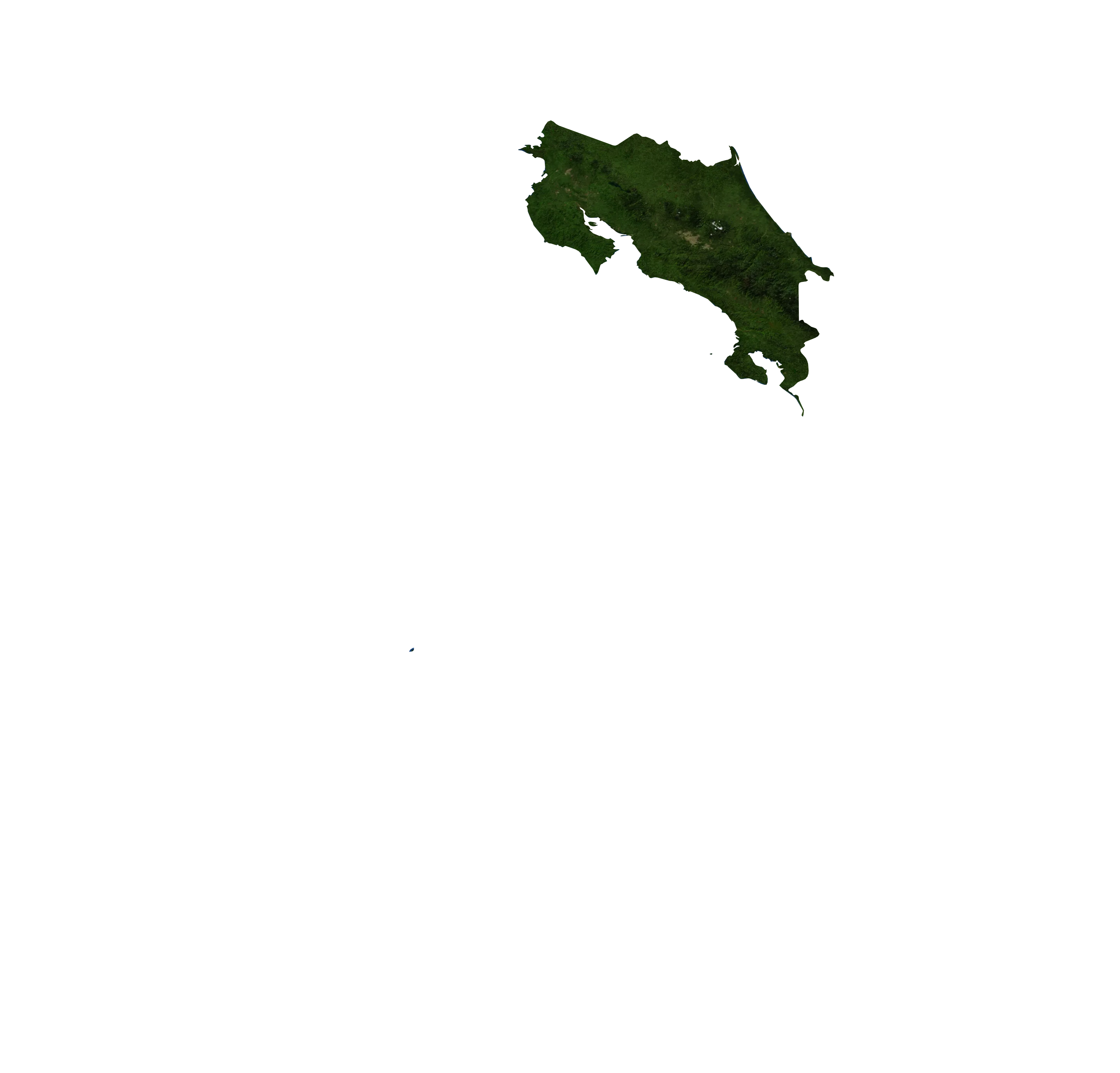
On a map, Costa Rica is a narrow strip of land between two oceans. Keep scrolling, and let the map tell you the rest.
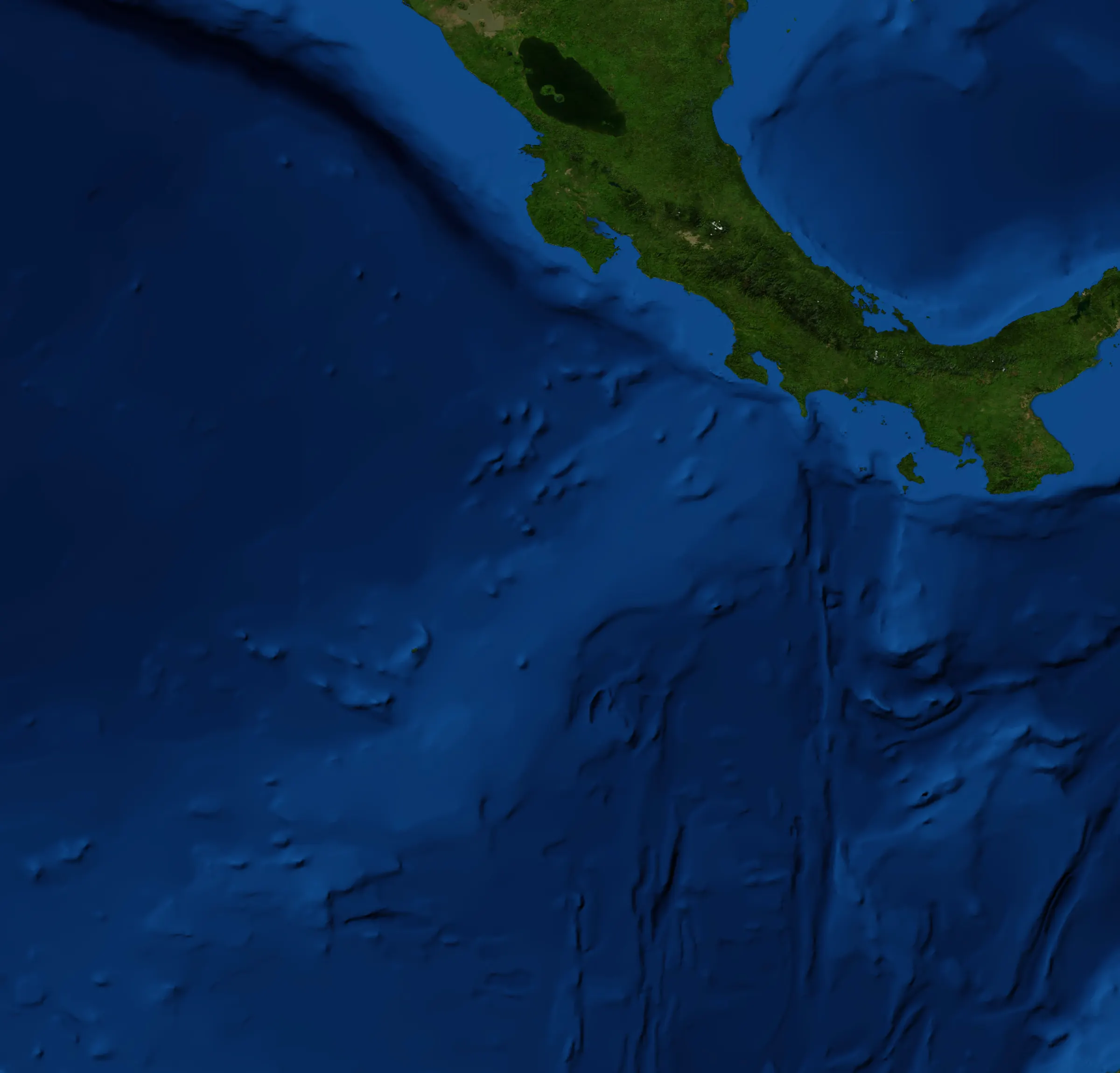
 Isla del Coco550 kmPuntarenasSan JoséPacific OceanCaribbean Sea200 km
51,030 km²
of land
Volcanoes, cloud forest, rivers and two coastlines. This is the Costa Rica everyone knows.
Source: CIMAR, Universidad de Costa Rica, 2019 ↗572,877 km²
of sea: 92% of the country
Now add the water it answers for: about eleven times more sea than ground. Costa Rica is, above all, an ocean.
Source: CIMAR, Universidad de Costa Rica, 2019 ↗550 km
offshore, Isla del Coco
A UNESCO World Heritage Site since 1997, and the only island in the tropical eastern Pacific with a tropical rainforest. Its waters are one of the rare marine areas where no fishing is allowed.
Source: UNESCO World Heritage Centre ↗
2.7% → 30%
of the sea under protection
In 2021, Costa Rica grew Isla del Coco National Park from 2,034 km² to 54,844 km², and the Bicentennial Marine Management Area beside it from 9,649 km² to 106,286 km², taking the protection of its seas from 2.7% to about 30%.
Source: Área de Conservación Marina Cocos, SINAC ↗All year
blue whales at the Thermal Dome
Off the Pacific coast of Central America, cold, nutrient-rich water rises in the open ocean. Blue whales are there year-round: it is one of the main winter–spring breeding grounds of the northeast Pacific population, and young calves have been seen there.
Source: IUCN Marine Mammal Protected Areas Task Force ↗
Imagery: NASA Blue Marble Next Generation (public domain). Sea boundary: Marine Regions, Flanders Marine Institute (CC BY 4.0). Land outline: Natural Earth. Areas: CIMAR, Universidad de Costa Rica.
The people
The people doing the work
Rangers on long shifts. Scientists out at dawn. Fishers, guides, volunteers. This sea is still wild because people keep it that way. Here are some of them: go and see what they do, and back them if you can.
Dimerso has no partnership with any of these organisations and makes no donations to them. We list them because their work deserves to be known.
SINACSistema Nacional de Áreas de Conservación
Costa Rica's national system of conservation areas, part of the environment ministry (MINAE). It manages the country's protected areas on land and at sea, Isla del Coco among them.
Visit SINAC: sinac.go.cr ↗FAICOFundación Amigos de la Isla del Coco
A non-governmental organisation dedicated to supporting the sustainable management and conservation of Isla del Coco and its ecosystems.
Visit FAICO: cocosisland.org ↗MarVivaFundación MarViva
A regional non-profit, founded in 2002, working for marine conservation and the sustainable use of the sea in Costa Rica, Panama, Colombia and the Eastern Tropical Pacific.
Visit MarViva: marviva.net ↗Misión Tiburón
Protects the ocean and the life it holds through education and scientific research, with a focus on sharks and rays, in Golfo Dulce, Isla del Coco and Guanacaste.
Visit Misión Tiburón: misiontiburon.org ↗CREMACentro de Rescate de Especies Marinas Amenazadas
A Costa Rican marine research and conservation organisation, founded in 2012, working on sea turtles, sharks and sustainable fisheries in Costa Rica and Central America.
Visit CREMA: cremacr.org ↗
Your part
No grand gesture needed
Just a few honest ones.
Visit
Come and see it. Go with local guides, follow each park's rules, keep your distance from wildlife, and leave the beach as you found it.
Support
Give your time, your skills or a donation directly to the people doing the work. The organisations above are a good place to start.
Learn
Open the sources on this page and tell someone one thing you didn't know. Caring starts with knowing what's there.
Pick up
Take out what doesn't belong, on the beach and in the water. And on this site too, if you spot something drifting.
Back up
Thank you for coming down with us.
We build software for a living, and we'll keep going under to do it well. But the sea was here first. If this page made you want to see it for yourself, go. It's worth every breath.
Dimerso · San José, Costa Rica
Credits
Photographs
- Megaptera novaeangliae: Giles Laurent, CC BY-SA 4.0
- Istiophorus platypterus: Vsevolod (iNaturalist), CC BY 4.0
- Lepidochelys olivacea: incidencematrix, CC BY 2.0
- Noctiluca scintillans: makelessnoise, CC BY 2.0
- Sphyrna lewini: Kris-Mikael Krister, CC BY 2.0
- Grapsus grapsus: Lt. Elizabeth Crapo, NOAA Corps, public domain
- Arothron meleagris: Chris Spain, CC0
3D models
- “Humpback Whale” Bohdan Lvov, CC BY 4.0
- “Sailfish” Mateus Schwaab, CC BY 4.0
- “Scalloped Hammerhead Juvenile” sharkingaround, CC BY 4.0
- “Model 53A - Flatback Sea Turtle” DigitalLife3D, CC BY 4.0
Map
- Blue Marble: Next Generation, topography and bathymetry (August 2004). NASA Earth Observatory, Reto Stöckli; public domain
- Maritime Boundaries Geodatabase, Costa Rican EEZ. Flanders Marine Institute (2023), marineregions.org; CC BY 4.0
- Admin 0 – Countries, 1:10m. Natural Earth; public domain